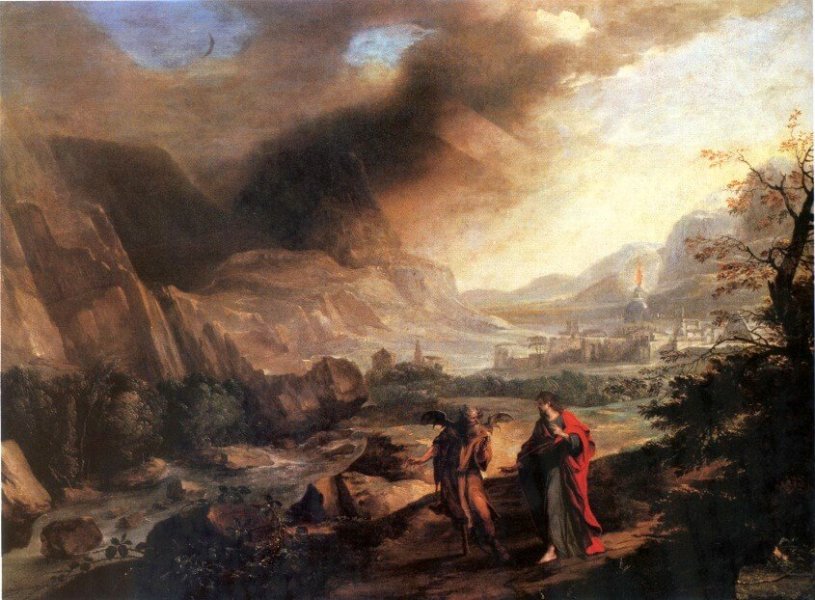
What if Mark’s odd sounding phrase, “the Spirit cast out (ἐκβάλλω) Jesus into the wilderness’ isn’t an example of his legendary rough Greek, but a pregnant theological allusion?
Here’s the text for reference:
Mark 1:12 Καὶ εὐθὺς τὸ πνεῦμα αὐτὸν ἐκβάλλει εἰς τὴν ἔρημον. 13 καὶ ἦν ἐν τῇ ἐρήμῳ τεσσεράκοντα ἡμέρας πειραζόμενος ὑπὸ τοῦ σατανᾶ, καὶ ἦν μετὰ τῶν θηρίων, καὶ οἱ ἄγγελοι διηκόνουν αὐτῷ.

And immediately the Spirit cast him out into the wilderness. And he was in the wilderness 40 days being tried by Satan, and he was with the wild animals, and the angels were ministering to him.
Mark primarily uses ἐκβάλλω to talk about casting out demons. Why use it here? One common answer: it is his rough Greek peeking out, which Matthew and Luke smooth over in their retelling. But what if Mark’s odd sounding phrase is a pregnant theological allusion? Jesus is cast out into the wilderness because that’s where the outcasts are he came to rescue.
Here are the three steps to follow that open up this possibility. We’ll:
- see how this odd phrase is explained in the synoptic problem – as an example of Mark’s rough Greek
- find that the meaning of ἐκβάλλω is not as harsh as is often asserted, and
- consider Genesis 3.24 as a connection point for a theologically pregnant allusion.
The Synoptic problem and Mark’s Greek
During a doctoral seminar on the Gospels, the professor asked us all to take a position on the order of composition of the Gospels.
John was the last Gospel written. That much is easy. But the other three are far trickier.
Matthew, Mark, and Luke share a dizzying array of overlap and difference. Which came first, who borrowed from who, when, and how—these questions collectively are known as the synoptic problem. Perhaps the most-accepted theory today is that Mark was first and Matthew and Luke both borrowed from and reworked material from his Gospel.

A key plank in this argument is that Matthew and Luke seem to make “improvements” on Mark’s Greek (which at times could really use the help).
Mark 1.12 is a case in point. Mark famously uses the word ἐκβάλλω to describe how the Holy Spirit got Jesus out into the wilderness after his baptism. Throughout Mark, this word almost always describes how Jesus casts out demons from people (13 of 18x, and most of the others also meaning cast out). It seems odd that Mark uses this word, which throughout his Gospel is strongly associated with spiritual conflict, to describe Jesus’ first great act of obedience to the Spirit’s leading as he begins his ministry.
Maybe Mark’s Greek is rough; or maybe something deeper is going on.
Checking the meaning of ἐκβάλλω: it is not so odd here as appears
While ἐκβάλλω can certainly be violent in implication, and such forceful uses are the norm in Mark, its semantic range allows for many nonviolent usages as well.
If you are content with the assertion you’ll find in lexicons that ἐκβάλλω is used both with a connotation of force and without, feel free to skip down to the next section. If you are interested in some examples from contemporary literature clearly demonstrating that ἐκβάλλω need not be rough in meaning, carry on.
- Μt. 12.35 ὁ ἀγαθὸς ἄνθρωπος ἐκ τοῦ ἀγαθοῦ θησαυροῦ ἐκβάλλει ἀγαθά, καὶ ὁ πονηρὸς ἄνθρωπος ἐκ τοῦ πονηροῦ θησαυροῦ ἐκβάλλει πονηρά.
- The good man brings out good things from his good treasure and the wicked man brings out wicked things from his wicked treasure.
- Acts 9.40 ἐκβαλὼν δὲ ἔξω πάντας ὁ Πέτρος καὶ
- And removing all [the mourning widows] out of the room, Peter…
- Abraham_A 6.7 καὶ τὰ δάκρυα αὐτοῦ ὀψὲ ἐν τῷ νιπτῆρι πίπτοντα ἐγένοντο λίθοι τίμιοι. καὶ ἐκβαλὼν ἐκ τοῦ κόλπου αὐτοῦ δέδωκεν αὐτὰ τῇ Σάρρᾳ, λέγων· Εἰ ἀπιστεῖς μοι, νῦν θέασαι ταῦτα.
- And his [the angelic visitor] tears after falling in the washbasin became precious stones. And removing them from his bosom, he [Abraham] gave them to Sara, saying, “If you don’t believe me, now look at these.”
- Apocalypse of Esdras 6.5 καὶ εἶπον οἱ ἄγγελοι· διὰ τοῦ στόματος ἔχομεν ἐκβαλεῖν αὐτήν.
- And the angels said, “through your mouth we will remove it”
- Lives of Prophets 2.11 εἶπεν δὲ ὅτι τὴν κιβωτὸν ταύτην οὐδεὶς ἐκβάλλει εἰ μὴ Ἀαρών…
- And he [Jeremiah] said that no one will remove this ark [from hiding], if not Aaron…
Looking around at other uses, we can see that the basic meaning of ἐκβάλλω is something like “to remove X [from Y] [and put it somewhere else].” This is just your basic lexicographical work, only here are some of the examples rather than lists of references. From the examples it’s clear that while ἐκβάλλω often has a connotation of force or violence of the sort in English “expel,” that is not necessary.
Thus, Mark’s usage of ἐκβάλλω here may be nothing more than a clumsy case of using a word that will fit in place of a more elegant word.
But I think not.
Casting out to find the Outcasts: ἐκβάλλω as a theological allusion
The Holy Spirit cast Jesus out in the wilderness to face temptation so that he could find Adam there and bring him back to Eden.
Having already admitted that Mark usually uses ἐκβάλλω in the sense of ‘to expel’ but that the word by no means requires such a meaning, the final step is to propose why Mark used this word to speak of the Spirit of God moving Jesus out into the wilderness. My answer: a resonance to Genesis that is theologically pregnant.
Consider Gen 3.24 in the Septuagint (LXX):
Gen 3.24 καὶ ἐξέβαλεν τὸν Αδαμ καὶ κατῴκισεν αὐτὸν ἀπέναντι τοῦ παραδείσου τῆς τρυφῆς καὶ ἔταξεν τὰ χερουβιμ καὶ τὴν φλογίνην ῥομφαίαν τὴν στρεφομένην φυλάσσειν τὴν ὁδὸν τοῦ ξύλου τῆς ζωῆς.“

And he drove Adam out and caused him to dwell opposite the orchard of delight, and he stationed the cheroubim and the flaming sword that turns to guard the way of the tree of life.” (NETS)
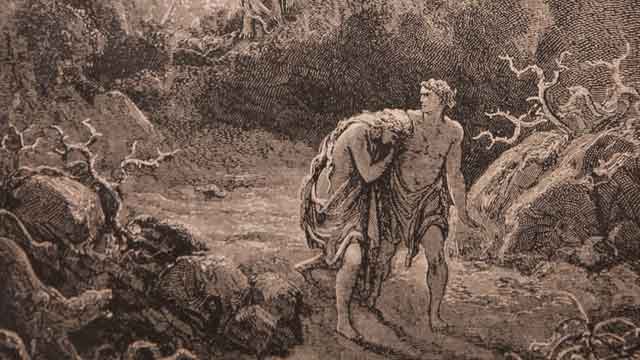
It’s all there. God ἐκβάλλω’s Adam out of the garden and settles him in the wilderness. In the Genesis narrative, the world is divided up into two places: (1) Eden, the pleasure garden God established, and (2) everything else is wild land that Adam—the person and humanity—is supposed to fill and rule over.
Humanity is cast out of God’s presence in Eden to live in the wilderness, where the wild things are.
It makes perfect sense that Jesus goes out to the wilderness to face temptation.
The Wilderness is where Adam (Humanity) lives now. To bring them back, Jesus has to go out there to them. He can’t rescue humanity by taking a trip to Eden. They live in the wilderness, they wander in the wilderness, they sin, they succeed, they die—all in the wilderness outside of God’s full promise.
This association of Jesus being sent out to the wilderness to rescue humanity is strengthened by another unique detail in Mark—the mention that Jesus is with the wild animals (Mk 1.13).
The animals play a significant role in the Genesis narrative. They are the first companions of Adam. They also multiply and fill the earth. When Jesus shows up, the animals are there in the wilderness waiting for their True Lord, too.
The Holy Spirit sends Jesus out to where Adam dwells, he succeeds in the temptations, and comes back ready to lead Adam back to Eden.
Summary
Taken together, Mark appears to present Jesus as the Son of God going out to where the Wild Things are, to where Adam the son of God dwells, so that he can bring them all back.
The odd use of ἐκβάλλω contributes to this pregnant allusion to the Genesis narrative. By contrast, Matthew and Luke’s formulation of the temptation narrative puts more emphasis on Jesus as repeating the history of Israel, the covenant people, in his temptation.
Mark’s use here may be nothing more than clumsy Greek. But it is so much more than just that.
 NT Greek et al.